
Vertel uw vrienden over dit artikel:
Notes from the Underground Fyodor Dostoyevsky
Besteld in een afgelegen magazijn
 Kerstcadeautjes kunnen tot en met 31 januari worden ingewisseld

Onze klanten zeggen:


Ook verkrijgbaar als:
- Paperback Book (2010) € 13,99
- Paperback Book (2017) € 13,99
- Paperback Book (2015) € 13,99
- Paperback Book (2025) € 14,49
- Paperback Book (2016) € 14,99
- Paperback Book (2023) € 14,99
- Paperback Book (2017) € 15,49
- Paperback Book (2016) € 15,99
- Paperback Book (2010) € 16,49
- Paperback Book (2018) € 17,49
- Paperback Book (2011) € 17,99
-
Paperback BookLarge Type edition(2010) € 18,49
- Paperback Book (2008) € 18,49
- Paperback Book (2013) € 18,99
- Paperback Book (2003) € 18,99
- Paperback Book (2014) € 19,99
- Paperback Book (2021) € 21,49
- Paperback Book (2011) € 21,49
- Paperback Book (2022) € 21,99
- Paperback Book (2022) € 21,99
- Paperback Book (2026) € 23,99
- Hardcover Book (2018) € 24,49
- Paperback Book (2022) € 25,99
- Hardcover Book (2021) € 26,99
- Hardcover Book (2018) € 28,49
Notes from the Underground
Fyodor Dostoyevsky
Notes from Underground, also translated as Notes from the Underground or Letters from the Underworld, is an 1864 novella by Fyodor Dostoevsky. Notes is considered by many to be one of the first existentialist novels. It presents itself as an excerpt from the rambling memoirs of a bitter, isolated, unnamed narrator (generally referred to by critics as the Underground Man), who is a retired civil servant living in St. Petersburg. The first part of the story is told in monologue form, or the underground man's diary, and attacks emerging Western philosophy, especially Nikolay Chernyshevsky's What Is to Be Done?[2] The second part of the book is called "Apropos of the Wet Snow" and describes certain events that appear to be destroying and sometimes renewing the underground man, who acts as a first person, unreliable narrator and anti-hero.
Serving as an introduction into the perplexing mind of the narrator, this part is split into nine chapters. The introduction to the chapters propounds a number of riddles whose meanings are further developed as the narration continues. Chapters 2, 3 and 4 deal with suffering and the irrational pleasure of suffering. Chapters 5 and 6 discuss the moral and intellectual fluctuation the narrator feels along with his conscious insecurities regarding "inertia"--inaction. Chapters 7, 8 and 9 cover theories of reason and logic, closing with the last two chapters as a summary and transition into Part 2.
The narrator's desire for unhappiness is exemplified by his liver pain and toothache. The narrator mentions that utopian society removes suffering and pain, but man desires both things and needs them to be happy. According to the narrator, removing pain and suffering in society takes away a man's freedom. This parallels Raskolnikov's behavior in Dostoevsky's later novel, Crime and Punishment. He says that the cruelty of society makes human beings moan about pain only to spread their suffering to others. He builds up his own paranoia to the point that he is incapable of looking his co-workers in the eye.
The main issue for the Underground Man is that he has reached a point of ennui and inactivity.
| Media | Boeken Paperback Book (Boek met zachte kaft en gelijmde rug) |
| Vrijgegeven | 13 december 1901 |
| ISBN13 | 9781989708859 |
| Uitgevers | Binker North |
| Pagina's | 128 |
| Afmetingen | 152 × 229 × 7 mm · 181 g |
| Taal en grammatica | Engels |
Meer door Fyodor Dostoyevsky


![Cover for Fyodor Dostoyevsky · Select Classics: Crime And Punishment: (Original, Unabridged Classic) (Paperback Book) [New edition] (2025)](https://imusic.b-cdn.net/images/item/original/917/9789815266917.jpg?fyodor-dostoyevsky-2025-select-classics-crime-and-punishment-original-unabridged-classic-paperback-book&class=scaled&v=1793043573)


![Cover for Fyodor Dostoyevsky · Crime and Punishment - Word Cloud Classics (Paperback Book) [2nd edition] (2025)](https://imusic.b-cdn.net/images/item/original/722/9781667209722.jpg?fyodor-dostoyevsky-2025-crime-and-punishment-word-cloud-classics-paperback-book&class=scaled&v=1730149533)




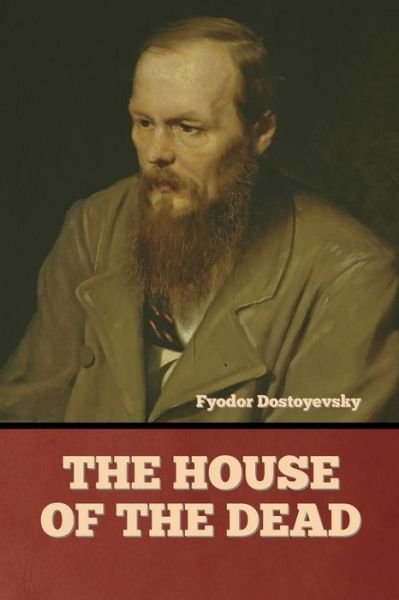

Meer uit deze serie
![Cover for Fyodor Dostoyevsky · Notes from the Underground - Dover Thrift Editions (Paperback Book) [New edition] (2000)](https://imusic.b-cdn.net/images/item/original/531/9780486270531.jpg?fyodor-dostoyevsky-2000-notes-from-the-underground-dover-thrift-editions-paperback-book&class=scaled&v=1408563510)
Meer van dezelfde uitgever


















Bekijk alles van Fyodor Dostoyevsky