
Vertel uw vrienden over dit artikel:
Charmides Plato
Onze klanten zeggen:


Ook verkrijgbaar als:
Charmides
Plato
The Dialogues of Plato: Charmides or Temperance by Plato. Translated into English with Analyzes and introductions by B. Jowett, MA The Charmides is a dialogue of Plato, in which Socrates engages a handsome and popular boy in a conversation about the meaning of sophrosyne, a Greek word usually translated into English as "temperance", "self-control", or "restraint". As is typical with Platonic early dialogues, the two never arrive at a completely satisfactory definition, but the discussion nevertheless raises many important points. The subject of the Charmides is Temperance or (Greek), a peculiarly Greek notion, which may also be rendered Moderation (Compare Cic. Tusc. '(Greek), quam soleo equidem tum temperantiam, tum moderationem appellare, nonnunquam etiam modestiam.'), Modesty, Discretion, Wisdom, without completely exhausting by all these terms the various associations of the word. It may be described as 'mens sana in corpore sano, ' the harmony or due proportion of the higher and lower elements of human nature which 'makes a man his own master, ' according to the definition of the Republic. In the accompanying translation the word has been rendered in different places either Temperance or Wisdom, as the connection seemed to require: for in the philosophy of Plato (Greek) still retains an intellectual element (as Socrates is also said to have identified (Greek) with (Greek): Xen. Mem.) and is not yet relegated to the sphere of moral virtue, as in the Nicomachean Ethics of Aristotle. the harmony or due proportion of the higher and lower elements of human nature which 'makes a man his own master, ' according to the definition of the Republic. In the accompanying translation the word has been rendered in different places either Temperance or Wisdom, as the connection seemed to require: for in the philosophy of Plato (Greek) still retains an intellectual element (as Socrates is also said to have identified (Greek) with (Greek): Xen. Mem.) and is not yet relegated to the sphere of moral virtue, as in the Nicomachean Ethics of Aristotle. the harmony or due proportion of the higher and lower elements of human nature which 'makes a man his own master, ' according to the definition of the Republic. In the accompanying translation the word has been rendered in different places either Temperance or Wisdom, as the connection seemed to require: for in the philosophy of Plato (Greek) still retains an intellectual element (as Socrates is also said to have identified (Greek) with (Greek): Xen. Mem.) and is not yet relegated to the sphere of moral virtue, as in the Nicomachean Ethics of Aristotl
| Media | Boeken Paperback Book (Boek met zachte kaft en gelijmde rug) |
| Vrijgegeven | 25 mei 2020 |
| ISBN13 | 9798629174059 |
| Pagina's | 32 |
| Afmetingen | 152 × 229 × 2 mm · 58 g |
| Taal en grammatica | Engels |
Meer door Plato
Alles tonen





![Cover for Plato · The Republic [illustrated Edition] (Paperback Book) (2024)](https://imusic.b-cdn.net/images/item/original/405/9781434465405.jpg?plato-2024-the-republic-illustrated-edition-paperback-book&class=scaled&v=1497212240)


![Cover for Plato · The Republic: The Essential Philosophical Dialogue (Concise Edition) - Foundations (Paperback Book) [Concise edition] (2024)](https://imusic.b-cdn.net/images/item/original/938/9781804177938.jpg?plato-2024-the-republic-the-essential-philosophical-dialogue-concise-edition-foundations-paperback-book&class=scaled&v=1695111621)
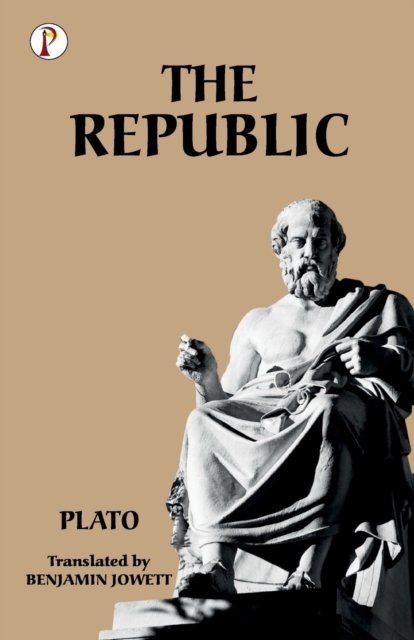


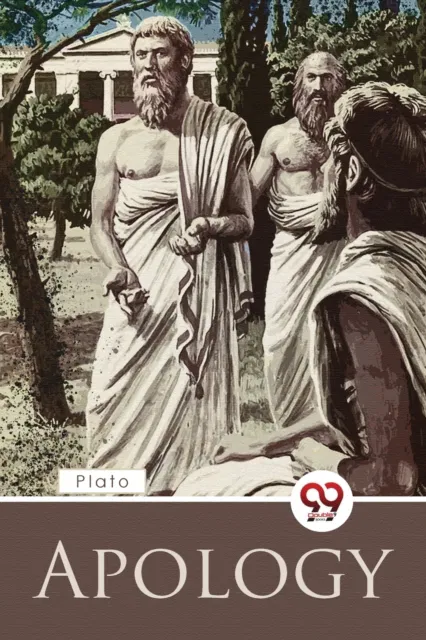
Meer uit deze serie

![Cover for Plato · Charmides. Euthyphron. Parmenides (Hardcover Book) [3rd 3. Aufl edition] (1901)](https://imusic.b-cdn.net/images/item/original/641/9783111243641.jpg?plato-1901-charmides-euthyphron-parmenides-hardcover-book&class=scaled&v=1773326258)
Bekijk alles van Plato ( bijv. Paperback Book , Hardcover Book , Book , CD en Book pack )